Showing posts with label books. Show all posts

Tuesday, September 1, 2026

4 years late, my first book finally has an index

A book that happened by accident - and what went wrong

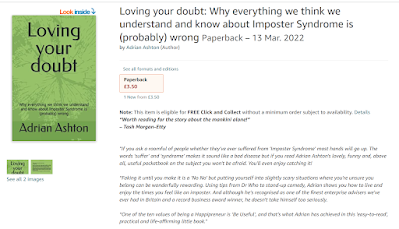
Back in 2022 I wrote and self-published my first book.

I did it because other people said I should.

And I did it all by myself, because I wasn't in a position to be able to afford to buy in the book editing, design, etc services that would have helped me spot and avoid any 'rookie gaffes'.

And just like anyone else who's ever self-published their own book, it was only after it started to appear in other people's hands that hindsight arrived (late as always) to point out to me all of those 'rookie gaffes' that I'd somehow failed to spot, before pressing the button to release it onto the wild and onto bookshelves.


My mistakes didn't impact on its success - but that doesn't mean they shouldn't be fixed 

Encouragingly, none of these gaffes which loom large for me seemed to have been spotted by the hundreds of readers all around the world who've bought copies of it and passed them around; they've not stopped the book from winning an award; and they've not prevented interest in it's ideas continuing to catch interest (4 years on, and people are still buying copies of it - without paid for advertising most self-published books stop making sales within a year, but I've never paid for any adverts for it).

But one of those oversights has always niggled me - I omitted to include an index to help readers navigate it. And I have an idea that indexes are also important because they reveal some of the insights and sources of inspiration that the author has drawn on in drafting their book: 


A novel approach to getting the missing pages in readers' hands? 

So 4 years on from when it originally appeared, I've now gotten to creating an index for it - and I'm taking what I think may be a world first approach in how I'm sharing this:

Most people would probably assume that the easiest thing to do would be for me to update the book's manuscript and send this back to the printers. But to my thinking, there's 2 problems with this:

1) it means that everyone who's already bought a copy will miss out on these bonus pages;

2) it means that I'm retrospectively editing the history of the book so that how it's read in the future will be different to how it was read in the past. That somehow doesn't sit well with me: the book as it currently has been that way for the last 4 years in its original form. And its in this form that its generated so many unexpected outcomes that I'm working on a sequel volume to it. To change it now would mean that future readers have different experiences of it, creating inconsistencies in it's own story and history as a book.

So instead, I'm choosing to make these extra index pages freely available to download and share as a 'print and stick in the back of your copy' approach.

This feels far more in keeping with some of the book's ethos in encouraging people to take a more hands-on approach to trying new ways of doing things - and for anyone who's wondering if it might be worth spending a few pounds to get their own copy, it offers an insight into some of the different themes and references I drew on in writing it.


To get your copy of the missing index to 'Loving Your Doubt' -

https://drive.google.com/file/d/1NCYAIF6Fu63W2-USxP5tMtg_aM7w3hXA/view?usp=drive_link


And for those of you who grab these pages, I'd be interested to know:

1) if you're a previous reader, has it changed how you now think about the book?

2) if you haven't read the book yet, how far does getting it's index influence the likelihood you might get a copy in the future? 


Tuesday, February 10, 2026

Am I really the Adrian Ashton you're looking for?

There's a habit in some magazines and social media feeds to list celebrities' birthdays - not to make us feel older, but to offer us some excitement by realising who we share a birthday cake with (for me, this list includes Tim Burton, Sean Connery, and Alexander Skarsgard).

But what about other people who we share a name with?


Other authors, tombstones, and pickleballs 

I started to think about this a couple of years back, when I discovered by accident that there's a world famous bassist player in musical circles who's published books (which does sometimes cause a bit of confusion when people are trying to find copies of the books that I've written): 

https://www.amazon.co.uk/stores/Adrian-Ashton/author/B0034Q4UZ8 

Then in 2024 most AI bots (and a client I worked with) thought I was dead -

https://www.legacy.com/us/obituaries/legacyremembers/adrian-ashton-obituary?id=43461197

And more recently I learnt that I'm an amateur pickleball player in Australia - https://pickleball.com/players/adrian-ashton/clubs?club_type=memberof&page=1


Right name, wrong Adrian, but a happy accident?

So, you next time you're typing my name into an email address line, or scrolling through your phone's address book to call me, please make sure that you've got the right 'me' to avoid possible confusion... or maybe it'll lead you to a wholly unexpected adventure?


Tuesday, January 6, 2026

How I'm (apparently) dangerous - in the best possible way

Last year I wondered what one of my literary heroes, Sherlock Holmes would make of my book about imposter syndrome (if you missed it, you can catch up with the great detective's take on it here). 

And it got me thinking about what another of my heroes might think about it - specifically, the wandering time lord known as Doctor Who. So, once again I've inserted the prompt into ChatGBT, and had the following adventure unfold...


-----


Oh, the Doctor would adore it—though they’d never admit that without a wry eyebrow and a bit of running.

Here’s how it would probably land in the TARDIS:


First reaction (feigned impatience):

“Loving your doubt? Oh brilliant. Humans invent a problem, name it, then write a book about liking it. Very on-brand.”


Second reaction (five pages in, pretending not to be moved):

The Doctor lives with doubt like a second heartbeat. Every regeneration, every impossible choice, every planet saved at the cost of another—doubt is the price of caring. So the core idea would hit home fast: doubt isn’t a flaw in the system; it is the system.

They’d clock that Loving Your Doubt reframes uncertainty not as weakness, but as:

  • evidence of moral awareness

  • proof you’re paying attention

  • the thing that keeps you from becoming a tyrant with a sonic screwdriver

That’s extremely Doctor-coded.


The big approval nod:

The Doctor mistrusts certainty. Villains are always the ones who are absolutely sure they’re right. Daleks don’t doubt. Cybermen don’t doubt. Time Lords stopped doubting—and look how that went.

So a book that says:

Your doubt means you’re human, reflective, and still capable of change”

would earn a quiet:

Yes. Exactly. Keep that.”


One gentle critique (because of course):

The Doctor might add:

Just don’t marry your doubt. Take it dancing. Listen to it. Then make the decision anyway.”

Because loving doubt doesn’t mean letting it paralyze you. The Doctor doubts constantly—and still acts. That tension is the point.


Final verdict:

The Doctor would see Loving Your Doubt as a deeply human survival guide in a universe that rewards arrogance. They’d probably leave it somewhere important—UNIT HQ, a struggling companion’s backpack, or a library on a doomed planet—with a note in the margin:

“Doubt means you care. Care means you’re dangerous—in the best possible way.”


-----


If you're still waiting for the Doctor to leave you a copy of 'Loving Your Doubt', you can shortcut the wait by picking up a copy via Amazon (or reading the reviews, to see what other human beings thought about it) - https://amzn.eu/d/dLd7OFL 


Monday, December 15, 2025

now I'm no longer twenty

You may have noticed that my blog posts this year have been a little different.

That's because 2025 has been the 20th anniversary of my business, and as part of 'celebrating' this milestone (over 90% of all start-ups don't make it this far), I wanted to commit to doing a few things:

  1. get more people to talk about toilets;
  2. write and publish a 20-year retrospective of perspectives on how this journey to date has been so far;
  3. and being more open and honest about things that we might usually shy away from, or consider 'too unprofessional' to share openly.


What happened this year

As this is the last scheduled of post of the year, it's usually the one were people look back over what they've done this year that they think has been most important - and this one is no exception to that custom, except I'm focussing more on what I think I've learnt and experienced by my attempts to mark 2025 as my porcelain anniversary:

- admitting to, and drawing the curtain back (a little more than I have done in the past) on the crises I've endured doesn't seem to have lost me any work (and actually made people more interested in me). It's also meant that others who are navigating their way in self-employment / small business ownership have been more encouraged by hearing that it's not just them that 'certain types of stuff' happens to.

- a year goes by more quickly than you think it does. I started in January by twinning my office toilet, but then it was the start of summer and the book I'd originally intended to have out in the world for the spring was still having pages added to it... but I managed to get it out in the end, and was rewarded by Amazon declaring it one of their top100 bestsellers of the year!

- in trying to make sure I also did the other things I meant to (like completely refresh my website), I messaged and tagged others as part of trying to ensure some accountability for myself in making sure everything I wanted to achieve actually happened. But none of them were able to help me keep in track with those things - and I don't think it was because they were rude or insensitive, they're just caught up in life and all the unexpected things that the universe throws at us each day that we have to prioritise and juggle. (And there's always next year to try and catch up with this 'still to do' list?).


What didn't happen this year

Which brings me to a key reflection about life overtaking me more times during the year than I hoped it would (usually for dramatic reasons connected to my being a sole unpaid sandwich carer) - and that's ok, as the other things I'd hoped to do to tie-in with this milestone anniversary year (refreshing my website, getting the 2nd edition of my first book done), can still be done next year (or maybe the year after that...)


How well did I celebrate 20 years compared to how others do it?

I also paused during the year to reflect on how others celebrate milestones in their own respective organisations. Most involved cake (which is always a good thing), but these also seemed to be fleeting moments - surely if we're serious about creating impact through what we do, then the way we celebrate our achievements should similarly leave some form of legacy or lasting benefit?


The moral of this festive story?

And maybe that's the key message of this end of (calendar) year reminisce - enjoy your anniversaries, because life is hard, and we need all the encouragement we can get. 

But don't blow it all on a single cake (maybe take out a monthly cake subscription?) - try and find ways that you can create artefacts and reminders of how you've managed to keep these plates spinning that you never thought you'd be handed. They'll then act as future encouragements not just to you, but to others too...


Friday, November 28, 2025

What Sherlock Holmes thought about my book

I've always been a fan of Sherlock Holmes for as long as I can remember - and while Jeremy Brett's portrayal in the 1980s Granada TV show will always be my personal favourite, I've also enjoyed all the other actors' portrays and re-imaginings of the role too.

As I've also shared in the past about having 'fan boy' moments in the sector, I recently found myself wondering what a (fictional) hero of mine might make of my first book, about imposter syndrome...


Sadly, Sir Arthur Conan Doyle is no longer with us to be able to take up his pen to craft the tale of how a conversation between Holmes and Watson might play out, where they to be musing over my monograph while residing at 221b Baker Street - so I did the next best thing, and asked AI.

Reassuringly, it seems to suggest that Holmes would have approved...


Scene: Baker Street. Holmes stands by the fireplace, the book in hand. Watson enters with tea.


Watson: You’ve been absorbed in that book for hours, Holmes. Another monograph on poisons?

Holmes: Hardly. It is Adrian Ashton’s Loving Your Doubt. A curious title, yet one containing a commendable premise.

Watson: Doubt? Most people try their best to avoid it.

Holmes: Precisely why most people think poorly. Doubt, Watson, is the beginning of all sound reasoning. This author argues much the same.

Watson: Does he now? And is he correct?

Holmes: On the whole, yes. He insists that the insecurities which plague so many—what you medical men call “imposter syndrome”—are not signs of weakness but opportunities for inquiry.

Watson: A rather optimistic view of self-criticism.

Holmes: Rational, not optimistic. When a man doubts himself, he has a chance to examine the origin of that doubt. If he pursues it logically, he may discover either a flaw to correct or an illusion to discard. Both outcomes are useful.

Watson: So you approve of the book?

Holmes: I do. It teaches readers to do consciously what I often do instinctively. Were Scotland Yard to adopt its lessons, we should see far fewer bungled investigations.

Watson: Holmes, I suspect that were Scotland Yard to follow any book you approved of, the prisons would be overflowing.

Holmes: One can but hope, Watson. One can but hope.


Saturday, June 7, 2025

Half way through the year; missed most of my goals so far; but still feeling ok

So we're officially now in June - half way through 2025, and only 6 months to Christmas! 

And tied to our collectively reaching this calendar milestone, seems to have been a recent small flurry of emails, posts on social media, etc from lots of people encouraging us to reflect on how well we've been smashing things for these first 6 months of 2025.

Except when I look back over my shoulder at what I've 'smashed' since January, I find myself at serious risk of giving up on the second half of this year:

- as part of marking the 20th anniversary of my business I wanted to publish my second book out (a retrospective of these first 2 decades). And although I've somehow managed to get the manuscript done, there's still the getting around to sorting out and completing final details that keeps eluding me...

- I wanted to get my website redesigned (I can't remember last time I did it); similarly as part of the porcelain anniversary this year. But I've not yet started that conversation with my web-hosters, SmartBear (but maybe by being so openly public it'll help me be more accountable?).

- I signed up to a few on-line/self-paced courses, which I've not even opened session 1 of yet (I'd hoped that paying actual cash for them would help me better follow through, but turns out not).


Now, none of these involve training to climb a mountain, staging a global conference, or creating a new on-line course, so what have I been playing at to let these things slip so much? After all, if you break them down, they could all have been easily be covered off if I'd devoted just 1 combined hour a week to them all.

Which brings me to the crux of this post - it's easy to set ourselves the goal, and equally easy to miss it (kudos to Douglas Adams for the sound effect of when we do), and when we see it happening we get disheartened, and so are more likely to leave things unfinished. Worse, we're probably also less likely to even try to set a future ambition as a result.


But here's the trick that I'm using to keep my motivation going: what the hell have I been doing in these last 6 months which which meant that I missed achieving these otherwise very achievable things?


Professionally - the start of this year saw the end of a lot of funded business support programmes of various types; and I found myself being approached by several to help them make sure that they'd hit all their targets, had all the audit paperwork trails in place, and enterprises being supported by them were in the best possible health as they cut the (financial and support) cord after March. Anyone who's managed funded projects knows how hectic the last few months of any can be. Multiple that by 3 to 4...

Personally - my unpaid caring roles were notably ramping up (and continue to). I'm not going to share details here, because the stories about the immediate family members I support are theirs to share, not mine. But for context, the government's (and most carer support services') support for carers is based on the assumption that you only care 1 for person. Recent research is starting to come out that's helping to highlight the different and more stressful experiences of the 'sandwich carer' (someone who cares for 2 people who span different generations). I'm in the next camp of being the sole unpaid carer for 3 people. Added into this, I'm self-employed (which means I'm not recognised in law as a carer), so I'm needing to spin the plates of supporting them, keep my business running to help keep the rent paid, and all with no support for myself in these roles...


So maybe missing my targets is OK - because I can see that a lot of good stuff has still been happening in wider communities, and for those closest to me. And that only happened because I didn't stick to my goals and pursue them above all else, (and there's still another 6 months for me to catch up with them, right?).

Just as I shared earlier this year about giving up on a dream that I'd been chasing for 20 years, maybe we should also hold the goals we set for ourselves more lightly too - and try to recognise that sometimes not achieving them can serve a greater purpose?    

Tuesday, June 18, 2024

editors, proofreaders, and imposters...

After accidentally writing a book about imposter syndrome a couple of years back, I find that I keep being approached by people to speak about it at their events, or as a guest attraction for groups that regularly meet together (which is nice).

I've written these up where they've happened in the past, but am not afraid to admit feeling a little trepidation for the most recent 'gig', as it was with the Berkshire Chapter of the Institute of Editing and Proofreading (so a screenful of people who know how a book is supposed to look before it's published...). I'm not sure how well I would have braved such an apparently august body of professionals, were it not that I'd been invited by Louisa Ellins - not only a fellow BF'er but also equal recipient of the Non Employee of The Week award.


At the outset, some members of the chapter kindly shared the impacts that listening to the 'gremlin of doubt' (how I describe our inner imposters manifesting) has had on them - and whilst these were largely in keeping with what others have shared in comparable events, it was highlighted how it robs us of our confidence: which means that although we may find ways to press on and deliver our work and jobs, we don't enjoy the process as we otherwise might/should (which means we're unhappier, and therefore less of the complete person we can otherwise be).


The initial reflections from the Chapter after my 'turn' seem to circle around the importance of finding ways to better validate and assure ourselves that what we're doing is 'good enough'. Because in the absence of praise, or other affirmation from clients (and/or non-existent colleagues if we work freelance), we can quickly fall into self-perpetuating thought cycles that our work isn't good enough because hardly anyone ever tells us otherwise...

There were a number of practices that were shared as to how such 'positive re-enforcements' might be designed, adopted, and introduced:

- recognising that a client re-booking you is a sign of their happiness with your work (even if they don't say so...)

- the importance of defining what it means to be successful on our own terms (rather than trying to achieve the standards of others we may see in our sector or elsewhere)

- regularly celebrating each others' wins with peers (goodness knows, if we don't cheer each other on, no one else is going to!)

- and on those occasions when a project 'fails' or a client appears unfairly critical of our work, the importance of being able to find safe spaces with peers. This is to enable us to reflect on the experience to sense check how far the client may really be being unfairly unjust, and what we can best take from the experience into the future.


All in all, it was an enjoyable experience from my side of the screen, and I'm taking from how most reacted on their camera to different points in the event, that people found at least 1 thing in what I brought as encouragement, support, and reassurance.

And in sharing the book with a body of editors and proofreaders, I also started to think about how I'd written it in a way I'd never done before - I originally intended that the book should only be consumed as a physical artefact that people read with their eyes. But I'm aware that some people are hearing its words spoken to them, instead of reading them, because they're using a Kindle. Which starts to make me wonder how far the ideas and messages of the book are being equally conveyed if they're consumed by people in a different medium to that which I originally intended..?    

Thursday, February 8, 2024

why some people don't want to banish their imposter syndrome

Some people will be aware that I wrote a book about imposter syndrome, which turns out to be a bit like marmite: some love it, whilst others have uninvited me from speaking at events because of it.

The central idea in my book is that, after looking at lots of research papers and studies, and evidences from various places and sources, I don't think imposter syndrome is what most people say and think it is. 

(SPOILER - it's actually part of what it means to be a human being, helps keep us safe, and can act as a superpower in our work and lives).


But something that struck me as I waded through all the published research materials about it was a recurring thought: 'if all the evidence and research keeps showing this thing isn't what people say it is, then why does it seem that so people say they feel they have it, and it's negatively affecting their lives?'


Perhaps part of the answer could be that imposter syndrome is an illusionary truth - something that, because we've heard lots of people talk about it in the same way, we accept as being true without questioning it. Just like the 10,000 hours rule, breakfast being the most important meal of the day, etc. 

But I also wonder if it may also be to do with it being a 'label' which, in being external to a person, makes it easier to validate a lack of motivation or desire to progress on their part? (And so we fall victim to a self-fulfilling prophecy - best articulated in the armed forces through their adage of 'if a soldier thinks they'll die in battle tomorrow, they'll probably find a way to make it happen'.)


Suffering with 'something' can make it easier to justify not pushing ourselves to grow - but in doing so, we create a fake 'safe space' for ourselves, which only serves to limit our potential, and the lives we might otherwise be living.

As Baz Luhrmann once observed - "a life lived in fear, is a life half lived."

Tuesday, August 29, 2023

Nihilism, safety goggles, and the number 6 - freelancing with imposter syndrome

I've blogged in the past about the risks that being a freelancer can have on your confidence, and also highlighted in my book about imposter syndrome how working in this way can also mean you appear to be more prone to such feelings of self-doubt.

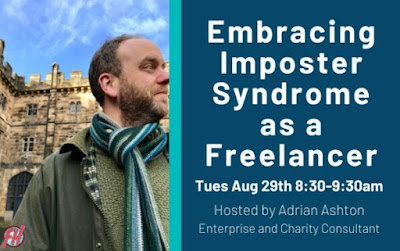
It was therefore exciting and encouraging to have been asked by Freelance Heroes (who are ultimately responsible for my writing the book in the first place), to lead a session to share and explore some of the ideas in my book - in hopes of helping offer fellow freelancers some encouragement and practical ideas for how they might get more out of working as such.


And whilst it's always exciting to share the books' ideas with new people to get their views on my arguments, and what these are based on, I also find it valuable to 'gather some more stories' about people's experience of feeling like an imposter - not just for the sake of possible 2nd edition, but more importantly to share with others through this blog, in hopes that they may be of encouragement to others I'll never meet...


People in the session shared that they'd signed up to it, in recognition of some of the impacts that feelings of self-doubt were having on their freelance careers, and which they wanted to try and do something about:
  • not charging as much as they could/should/(needed to), and so financially struggling more than they recognised that they perhaps needed to;
  • not pursuing contracts or projects that would help raise their profile and secure future work, for fear that they did not hold the right qualifications for it (despite simultaneously acknowledging that they had significant relevant experience).

There was also a key point that one person made about the confusion and overlap between feeling like an imposter, and having a lack of confidence.

It was also interesting and challenging to hear of some of the practices that some of the freelancers in the session had created and adopted, in how they currently deal with feelings of imposterism:
  • phoning a trusted friend for a 'sanity check';
  • adopting a nihilistic mindset, and disassociating themselves from their work, to try and protect themselves against the potential risk of things not working out as they might hope they would.    

As we wrapped up the hour together, everyone shared that they'd found the time together of encouragement, and all committed to take a range of actions as a direct result of it:
  • increase their knowledge about specific areas of their existing work (libraries are always a good place to start for this!);
  • explore and better understand the 'origin stories' of what their doubt about their skill may be rooted in, so that they can design more effective ways to better manage it;
  • create feedback loops with clients and others;
  • talk about these feelings more openly with others, after realising that everyone feels them, to be able to hear others' experiences, and through these, better understand their own;
  • adopt a practice of self check-in questions with themselves when they think they may be feeling it, to help better manage these feelings of doubt and move through them;
  • experiment with different ideas to see which might work best for them (but as with any experiment, always make sure you wear safety goggles, just like when you were at school!).


What also struck me about the session was the number of people who were part of it - normally, on-line sessions and events I've been part of, or heard about, seem to attract (or need to book on) upwards of 15 people - we were a perfectly formed '6', which seemed to naturally allow for everyone to feel they could easily speak, and have the opportunity to explore and directly apply ideas and prompts to their own personal circumstances and situations.

So if you're thinking of joining a session to explore some of these ideas or feelings in the future, perhaps try and avoid the 'sell-out'/'big ticket' types, and hunt out the smaller groups as you'll likely get more benefit and encouragement from them (but only if you're really serious about wanting to do something about feelings of being an imposter...)


Tuesday, July 4, 2023

all business owners and entrepreneurs should do car-boot sales once in a while

Some readers of this blog may recall that in the past I've written about how I try and keep my hand in at running a market stall from time to time...

But recently, I broke my car boot virginity, and with my wife (who's a more seasoned pro at these things) filled the back of the car and set off at crazy o'clock in the morning to unload the contents in a field alongside others, in hopes of being able to generate a few quid from things which we can't offer a home for anyone - but which we thought might still be of value and enjoyment to others.

And whilst standing in a field all day, hoping that passing strangers will stop by our pitch and help us not have quite so much stuff to re-pack into the car at the end of the day might not sound that appealing to some, it was an experience that I'm glad I indulged in (and will probably try and do again in the future):

- it highlighted the changing patterns in our society of how we consume/do business: for example, no-one buys CDs and DVDs, because these media are now available on streaming services;

- it re-enforced how hard it is to sell clothes (however cheaply you offer them), as fast fashion makes it so easy to buy on line (and have option to return without cost);

- and it also evidenced how increasingly time poor people are: comments from people in our neighbouring cars and pitches who've been doing it regularly for years, all agreed that there are far fewer people browsing than used to.


But, having a pitch at a car boot sale also reassured me that as much as things are changing (see above), some things will remain as true today and tomorrow as they did when I was a kid - 

* parents are always keen to encourage their kids to get into reading actual physical books;

* cash retains a place in how we do trade;

* and we'll always want an ice cream from the van...


Tuesday, April 11, 2023

imposters in the RSA

I was recently asked to give a talk about some of the ideas in my book about imposter syndrome by the RSA North, as part of their ongoing Coffeehouse programme which seeks to spread thinking and insights to help create more/better change throughout our communities.

Having been approached to become a Fellow in 2007 by direct invitation from the Society (to my knowledge, the only such instance - everyone else I meet who's connected to the RSA became a Fellow through either direct personal application, or being nominated by an existing Fellow!), I've always been encouraged by the profile and ideas of other people that they've helped to share, so to now be part of that recognised body of changemakers who they offer a platform to, is an exciting validation of my own!


But unlike previous invitations I've received to date from sector bodies to lead conversations based on the ideas in the book, this time the format was much more about my conveying a summation of my research and arguments, followed by a short Q&A.

Rather than re-hash what I shared in my presentation (that's all available through either reading the book, or dipping in and out of the 2-min videos on my YouTube channel's playlist), I wanted to try and capture some of what people shared in response to what I brought, and the initial conversations that started to flow from it:

  • Many people in the session felt that they don't have easy access to opportunities to talk about any feelings of self-doubt in constructive ways. As a result, people can live with feelings of imposterism for prolonged periods of time, unsure of how to resolve them, and this can create ongoing damage and distress for them.  
  • Imposter Syndrome can sometimes be 'weaponised' by others against us: if we start to exhibit skill and potential that a colleague feels threatened by, it can be easier for them to seek to undermine our confidence to maintain their position, rather than 'rise to the challenge' and 'level up their own game'.
  • If a person feels that they've never experienced feelings of self-doubt/imposterism, then this may be a sign that they could have psychopathic traits. However, this does not automatically mean that such people are automatically dangerous or destructive...
  • A lack of role models for a person in new or emerging roles (which can be a frequent 'root cause' of feelings of imposterism developing within someone), can sometimes be mitigated through a carefully designed mentoring or coaching relationship.


But as always with opportunities like this to reflect on the books ideas with others - to gain feedback, critique, and seek to further build on them, the time goes all too quickly. And the above capture offers tantalising hints at future conversations we might like to explore more fully and deeply - so, if you were in that lunchtime talk, and want to carry on the discussion, or you'd like to reflect on some of your own experiences and thinking about any of the above, I'd be very happy to find a time to chat over a cuppa (virtual or otherwise!).

Tuesday, August 9, 2022

how reading in the bath changes the world

I was recently invited by those nice people at Social Value UK to be the 'main attraction' in an open lunchtime conversation about how we might understand the ways in which the things we write (blogs, books, manifestos, etc) actually create change amongst the people who read them.

This was, in part, prompted by my openly committing earlier this year to be deliberately seeking to identify the impacts that my book on imposter syndrome is creating - over the last few months, I've started to capture evidences and illustrations of some of the changes that people are experiencing and adopting as a result of engaging with my ideas in the book. This open conversation therefore allowed me an opportunity to reflect with fellow social value and impact practitioners on these emergent practices and approaches to challenge my own thinking to date, and any bias that may be creeping into my 'navel gazing'...

The below summarises what I took from the conversation as encouragement, challenge, and further provocation. It's shared in hopes of helping to continue this conversation, and also capture the insights and ideas shared for the benefit of others:


"Impact should be able to be recognised and celebrated, even if can't be evidenced" - there's often a fervour to capture feedback forms, survey responses, and such like in the rush to prove that good things have happened. But as any good scientist knows, the very act of observing something changes its nature, so sometimes we should be OK with being able to accept and acknowledge impacts on faith, without needing to see reams of data and charts behind the assertion?


"All impact is subjective" - we live in a world of very few moral absolutes: what is important for me is less so for you (think Marmite), so how should we recognise and prioritise the impacts that our words create? To take this idea further - for what purpose are we wanting to understand the impact that our book is creating?  For me, that's actually easy to answer: I never had any intentions to write or publish a book - rather to 'scratch an itch' about an idea, so in the spirit of lifelong learning, I'm genuinely interested to see what it causes. This is because that will ultimately help me better decide if there should be a 2nd edition, a book about something else, or I should hang up my author's quill altogether... 


"Will we still be reading books in 200 years time?" - the impact of books can echo far further into the future than our current ways of considering impact can hope to capture - Charles Dickens wrote books 200 years ago that still speak to us today as encouragement and challenge, as do the works of Shakespeare from 400 years ago... Should we then, at least, hope that the books we write today will still be pertinent to what it means to be human and how we live our lives in the centuries to come?  Unless, that is, we're wanting to create impact around a specific current issue - because if our words work in the way we anticipate they will, then they it will no longer be of relevance or interest beyond the next generation. Which takes us to the next point...


"Why are we writing in the first place?" - what impact are we hoping to create from the books we write? We know that Dickens and Shakespeare, as well as writing for the entertainment of others, sought to use their books as ways to try and influence societal practices and cultures that they felt uncomfortable with. And we know that some writers today are seeking to influence lifestyles and worldviews to mitigate climate damage, and/or help us better think about our relationships with technology. But I wrote my book without any specific intended impact in mind that it would create in others, other than to try and widen conversations people had about feelings of imposterism - as authors, do we need to have a specific intention of how our words will create impact (although it might be easier to track progress against them if we do)?


"Are we wanting to change the reader, or change their world?" - and to extend this idea about the impacts we seek to create in others - are these impacts focussed on the individual who reads the book (in that the changes they subsequently make benefit them), or are they more altruistic in seeking to influence the readers' behaviour so that they will in turn magnify and create benefits primarily for others around them?


"How far should we hold responsibility for what we write?" - but if we talk of intended impacts, we also need to consider unintended impacts: after all, as an author, we can't know or control how what we write will be read by others, understood by them, or selectively referenced to support their own agendas and positions. The way we publish can have some sway in mitigating this (self-publishing means that the authors 'voice' hasn't been edited, censored, or rephrased at the request of an editor), but it doesn't completely resolve it.  


"What's the impact of a slogan?" - how far does the medium and format of written words also influence change in/for people - for example, can slogans on tee-shirts have the same impact on a person's life as a book that they read?


"But what about the author?"  so far, we've considered impact of the book (or similar) on the people who are reading it - what about the impact on the author who writes it? What changes and benefits do they gain through this process (and how far should we be concerned about the benefits gained by this key stakeholder to the book?)


"Be the best stalker you can be" - Whilst the above all prompt further thought and reflection, the conversation also turned to practical matters - if you publish a book, you don't have any automatic way of knowing who's read it or who they've shared it with (outputs); how it's engaged them emotionally, and through that, prompted them to make changes in their circumstances (outcomes); and what changes in their life as a result (impact). This gave rise to some salutary reminders about not over-claiming impacts (after all, we don't know what people have also been engaging with alongside reading our book). Also, that comments people make in reviews about intentions can't be taken as assurance of subsequent changes they'll make in their future behaviours; and how do we even hear about what people are saying and sharing if we're not part of their networks?  


I can't speak (or write!) for the others who were part of the conversation - although I hope that they'll find ways to share with others what they took from this conversation in turn. But for me, I found it a very encouraging and progressive conversation that's given me plenty to keep reflecting on as I continue to seek to understand how proud or shamed I should be by the pocket-book I accidently wrote.

And for anyone wondering if anyone really did join us from their bath - and so qualified for a free copy of my book: hats (or rather, shower-caps) off to Charlotte Osterman of Social Value UK:

Monday, June 6, 2022

I changed my mind about kindle-ing my book

Earlier this year, I published my first book - on the topic of why everything we think we know about imposter syndrome is (probably) wrong, after I started to look at the research and evidence associated with this issue.

And at the time, I decided to invoke authors prerogative, and only make it available as a physical book - and as part of my sharing the why and how I'd come to accidentally write this book and put it out into the world, I also shared my reasons for this choice.

However, as some may recall, I've shared in previous blog posts how I'm always open to 'being proved wrong' - and this foray into the world of being a published author is no different.

Since the book went 'live', I've had a couple of people ask about an eBook/Kindle version - and I've always politely referred them to the blog post giving the reasons why it was only available in physical form.

But then someone challenged me on this with actual evidence and arguments. And given this is my first time in book publishing land, and I'm largely feeling my way as I go along, they were things which I'd honestly not considered in my original thinking (accessibility issues, import taxes between countries, potential for climate impact, and more opportunity for spontaneity).

So, I've 'relented' and made a copy of the book available as a kindle eBook. 


The reason it's the same price as the physical copy remains true to my original thinking about what to price it at, and I've also allowed for it to be shared between people in the same way you can if you buy a physical copy.

So, if there's moral to this story, it's probably that you should always reach out to authors if they've not done something that you might have preferred/like them to; and that Suzanne Whitby is really good at challenging your thinking (it was her arguments that finally 'tipped me' over to the eBook side...) 


http://thirdsectorexpert.blogspot.com/2022/03/i-did-book-thing.html

https://thirdsectorexpert.blogspot.com/2011/11/its-great-to-be-proved-wrong-really.html 

https://www.amazon.co.uk/dp/B09V25N8G6

Tuesday, March 15, 2022

I did a book thing.

If you haven't already heard, yours truly is now a published author!

As of the morning of Monday 14th March, anyone can click onto the Amazon bookstore, and buy a copy of my pocket-book about imposter syndrome (and why everything we think and know about it is probably wrong).


Doubtless I'll be encouraging and sharing teases about the book and its full set of ideas, approaches, and tools in posts elsewhere across the social media-verse over the coming weeks (and possibly months), but I wanted to pause here to reflect on why a book, why now, and how I 'did it'.


Why a book and not a blog, as I've done with all the ideas I have?

A couple of years back, I found myself starting to think about the subject of imposter syndrome following an assertion a speaker made, in a workshop that I was sitting in on. 

Normally, as you may be aware, I would then take to this blog to expound upon the idea, as I've found the process and habit of working it through/writing it out in this format quite useful for me. Except this time I quickly realised that the idea was going to be bigger than one of my usual blog posts. And it needed more thinking to work it out. 

So I hit on the idea of approaching it as if I were going to write a book about it. And when I'd finished doing the extra researching and reading around it, and getting all my notes and workings out together, I was happy that I'd worked the idea out. But I was then left with a book.

I'd never intended to become an author (despite encouragements from various people over the years) - but then, I never intended to become self-employed either...

I've always thought that knowledge does more good when shared (even if it's only for people to disagree with it), so the logical thing to do seemed to be publishing it.


Why now?

I've never felt that any of my previous ideas were strong enough to warrant developing to the point that they could become a book - as other posts in my blog, and videos on my youtube channel will attest to...

But as anyone who flips through a copy of the book might realise, it should really have been 6 months ago, rather than 'now' (March 2022) when it hit the bookshelves. It was pretty much done then, but the truth is that I started to procrastinate. Perhaps understandably so, as I'd never written or published a book before. So, like most things we do for the first time, there's a certain sense of fear and trepidation which starts to immobilise us. I'm sorry to say I let myself remain immobilised for longer that I was happy with, but now I've done it once, if I ever do it again, it'll be quicker to get to print!


And the process of 'doing it'?

I decided to try and keep things as simple as possible. 

I invited a select few people to review my final draft for sense (all of which are name checked in the books' thank-you list, with the influence that they had on the original idea). All of them were positive about the ideas I'd presented and argued, and a few even offered comments that I've used as the blurb on the back cover to it.

I also didn't read any of the existing books, or watch any of the many youtube videos on how to self-publish your own book. Not because I don't think the people who've done them aren't trying to be helpful and encouraging to others, but because I'm not publishing a book as part of some grand plan or ambition - it's simply an unintended consequence of my starting to work out what became a bigger idea than I first thought it would be. And as such, I'm not too concerned with making sure I do things in ways that we're all supposed to be doing them, or that the system is set up to help promote (after all, everything else in my business model and how I work usually seems to defy and go against accepted wisdom, so why should this be any different?).

I self-published using KDP - which may not be without some controversy for some, but it felt very simple and straightforward to copy my text into their template, pick a template cover design (I realised part of my procrastinating was in trying to edit and format what I thought would make a neat cover in Word, into a file format and design that I could upload, but ultimately, I want people to read the content, not admire my attempt at design).

I've also realised that self-publishing in this way sometimes means that the formatting I'd originally created didn't always exactly map across into the KDP platform. But, again, I resolved that I would rather it be a bit 'rough around the edges' and at least out there, rather than my still be tinkering with it weeks (or even months) from now... and depending on how its' received by people who read it, there's always the prospect of a 2nd edition in the future for me to go back and tidy up all those bits.

For now there's also no epub version - only a physical paper copy. That's because I personally prefer to read any book in this format; because I think we risk spending too much time staring at electric screens as it is; because its easier to physically write in/deface physical books; and because somehow electronic books never quite smell right... 

Finally, I've set a price which has already been referred to by others as 'ludicrously low'. But as with everything else in this process, I never set out to publish a book, but rather to work out an idea and find a way to share that with other people. The price is based on the average price of a coffee or pint of beer, that, if we were to meet in person and chat through the idea, would be what you would hopefully be inclined to offer me in exchange for my time. So why charge you more than that?


At the time of posting this blog, I'm still yet to have a physical copy of it in my hand, but encouragingly, I've had several requests from people for signed copies already!


Thursday, July 15, 2021

be kind, above all else in your professional life

As a consultant-type (of sorts), I'm often seen as someone who is clever, knowledgeable, experienced, etc. Most other consultants you see will probably present themselves as being these things as part of assuring you that they're worth your spending your money on them.

But I've often wondered how far these things really matter when businesses, co-ops, charities, social enterprises, universities, government bodies, and others who invite me to work with them, are really wanting and valuing these attributes.

And my wondering about this has, over the years, seen me introduce some unusual practices (such as asking people what they think my superpower is, and not being overt about the various qualifications I've come to hold ), and subsequently also make changes to how I work as a result of what I learn about how I'm seen, and how people value what it is I'm able to do with/for them.


So why am I sharing this with you here? If you're someone who's kindly offered me feedback about my working practices in the past, you'll know this already. If you're someone else, you may be thinking that this may be sound vaguely interesting, but it's all very personal, and are struggling to see the relevance of why I'm reflecting on it so openly?

Well - wonder no more, because I now have an empirical data set (of sorts) to help me validate these ideas!


I recently came across Google's Ngram viewer, which is a nifty little site that allows you to track how frequently any given words have been used across all books published. So I thought I'd pop in a few keywords about how as consultants we think we're supposed to portray ourselves, and a few about how people seem to value the way that I work with them (click on the image to open the original google page and graph):


All those words about how the support consultants and advisers are supposed to 'be' and the attributes they're valued for, all pale against the approach to how we work with you.

Fortunately, kindness is one of the KPIs that I track within my annual impact report (listed as 'grace' and 'pro bono'), along with knowledge; so I know that I'm making sure I try and keep this at the forefront of how I work with people (following the adage that "we manage what we measure").


As consultants or advisers we're often initially commissioned on the basis of expertise or specific skill, but as the Ngram and my experience suggest, those things become far less important in the working relationship that we subsequently form when delivering on the agreed project. 

But I wonder how far others might agree with this?

Wednesday, June 6, 2018

oh, the places you'll go...


So many books on doing business and being an entrepreneur are filled with inspiring stories of what other people have achieved, and words of advice from people who haven't lived your life or faced the challenges, hopes and frustrations that you do.

Which is why I think 'oh! the places you'll go!' is the ideal book for any entrepreneur – it's presented from the view of a child: and children think that either everything is possible, or nothing is possible: a common mindset for entrepreneurs, freelancers, and the self-employed. And it’s also brutally honest that sometimes the best laid plans can come to naught despite our best efforts, but that somehow we'll manage to survive those tough times.

There are no complex mantras to remember, complex theories or tools to memorise, and it also comes with lots of fun pictures. For all those reasons and more, this is THE book that anyone launching their own enterprise should have by their bedside.