Showing posts with label values. Show all posts

Thursday, July 16, 2026

physically starved by other's forgetfulness

Sometimes we forget things (for all sorts of reasons) - and that's ok. After all, we're human, and its only human to slip sometimes (despite our efforts and intentions to the contrary).

But in the context of being both a small business / self-employed and an unpaid carer, there's often more significant fall-out if I forget something, than others might otherwise feel - for instance: forgetting calls with a client / missing deadlines on projects will make it harder to pay the rent next month; or a family member may lose their place on a hospital waiting list; etc. Which is why my calendar is full of so many reminders, and post-it notes litter nearly every available working desk space.


trying to be more grace-ful when it comes to others' forgetfulness

As some readers may know, I've tried to model my business around my values, which include 'grace'. And this manifests in part by my usually offering to not charge a client if they forget to join a meeting they'd asked for with me, and offering to rebook with them at no extra cost. This isn't based on my trying to guilt trip them, but rather recognising that sometimes life is messy, and things beyond our control can conspire against us - for example: how equitable would it be if I charged you for missing a meeting with me if it's because the train you were due to travel on was cancelled? 


the cost to me and my family, of my grace to you 

Several years ago, I started to track just how many such instances happened over the year - how many times did I find myself stood up by a client because their previous meetings had overrun, their travel arrangements had been disrupted, or they'd simply forgotten because they had so many other things on their mind at that time?

Each year, the value of this (expressed as lost earnings to me) features in my annual impact report as one of the core metrics. For the year 2025-26, this figure is £5,893: 

https://drive.google.com/file/d/1JcCFirEsoGTWA3CtdkICxValzJtiLpbK/view?usp=sharing 

That's equivalent to over £100 every week of the year. Which is roughly the same as our current household budget for the weekly food shop (which has to include consideration for one family member who lives with avoidant/restrictive food intake disorder).

Now, that may seem a bit of a shock to see this forgetfulness of others that I experience in these terms - but I'm actually slightly encouraged by it: in previous years, this grace figure was equivalent to the cost of renting a family home for the whole year!

https://thirdsectorexpert.blogspot.com/2023/05/how-peoples-forgetfulness-is-costing-me.html 


not to shame, but to help understand

We all lead increasingly busy and stressful lives.

We all 'drop the ball' sometimes.

But I have an idea that we're also all humans on this planet together, who should try and get along as best we can (after all, none of us are getting out of this alive, so lets try and at least make the journey as comfortable for each other as possible?)

So I don't track this number, or share it here, to shame and embarrass - after all, I track the equivalent number on myself, for what I've cost clients by having to bail at no notice for calls with them due to arising 'moments' with family members that I have to prioritise as an unpaid carer to them. (If you're curious, it was £294 over the same period).

I share it:

1) in solidarity with fellow freelancers and sole traders who may be frustrated when they're stood up by clients as well so you know you're not alone in this pain;

2) to help others understand the potential impact of their behaviours on the people they're dealing with;

3) as part of my commitment to being open and transparent in how I run my business.


but what would your parents (and Tony Robinson) say?

Ultimately, a large part of my thinking about how I approach all the relationships and practices in my business comes back to how my parents brought me up (or at least, tried to...). If they could see how you manage yourself through your working week, and how you're showing respect (or otherwise) to those around you that you deal with, what would they say to you about it?

And if you've ever been fortunate to meet / spend time with 'the' Tony Robinson in sunny Scarbados, you'll know that one of his golden rules of business is to never do something that means you have to cross the road to avoid bumping into a person in the future...

Friday, March 6, 2026

the worst of all worlds?

There's a pervading message that starting up your own business gives you more control of your life - you get to choose who you work with, when you work, etc. All of which helps reduce the stress of being at the beck and call of a boss (who you may not like).

But of course, there's a balancing cost to this control which isn't talked about as much: irregular income, no holiday/sick pay, no automatic pension contributions, etc (which means that various researches are starting to find that being an entrepreneur may not actually be that great for our mental health after all...).

Which means when it comes to working, there's a(n over-simplified) choice available to us:

1) work for someone else - which may limit our enjoyment, cause stress, but offers regular pay and time off;

or

2) work for ourselves - which gives us more freedom and choice, but means less security of income to pay the rent / buy food with, etc.


What I based my choice on (and the cost of this)

As I enter the 21st year of being in business for myself, I'm starting to wonder if I somehow haven't accidentally set myself up to 'enjoy' the worst of both of these options...

You see, my particular business model is based primarily on being an associate to other agencies and approved provider lists (I'm usually paid by other people for the work I do with client organisations). This means that while it may be easier for work to come to me, I have less choice in it, it may pay less, and it's usually structured so that I'm part of a managed team under a project manager/boss - just as if I were an employee (with all of the usual strains, pressures, and politics involved of such).

This model of working is based on my values of trying to be more accountable and transparent in how I work - but highlights that our values come at a cost: although there may be work coming in for me, and there are more checks and balances to check the quality of my work, it's often in a way that means I need to act as an employee would (with all the stresses of that) but without any of the benefits that being an employee would offer (no sick / holiday pay, etc).


Why I seem to be working in ways that make no sense

I can already hear some of you thinking "if you don't like it so much, then why not change the way you work?". Well, dear reader, that would mean I have to compromise on some of the values that define me. I'm therefore sharing this here not for sympathy, but to illustrate that in all of our choices, there's always a trade-off somewhere...

It's also shared in hopeful encouragement to others who are also thinking about their own respective business models / ways of working - it's up to us to work out how far we're willing to accept the trade offs of the choices we have. 

So while it may feel tougher than I'd like at times, running my business in a way that continues to buck conventional wisdom is my choice, and one that I regularly recommit to with eyes wide open. It's only me who has to sleep with my conscience at night: what I'm ok with in my business model won't be ok for you (and vice versa) - but shouldn't we all regularly pause to check that our business model isn't accidentally starting to make us become people we don't like?


NB - I always try and offer credit where its due: this particular post was inspired by Tom Jepson, and one of his 'subscriber only' YouTube lives.

Wednesday, January 21, 2026

why you're more, (and less), important to me than you may think you are

I try and see everyone as an equally important human being (an idea that started when I was a member of the Daily Bread worker co-operative, and which emerged as I learnt of the basis for it having a flat pay structure, regardless of people's skills, experience, age, qualifications, etc).


What qualifies you as a more important person?

You may be the chief exec of a national charity, but why does that make you more deserving of my time than some who's just been released from prison and is needing someone to support them with creating a new enterprise so they can avoid re-offending? You might argue that the hundreds of lives I can impact through working with the chief exec outweigh the needs of the individual ex-offender, but I'm not sure I'm qualified to judge the worth and value of anyone's life against another in this way.

This means that I try and treat everyone equitably - which includes how I allocate and prioritise time in my calendar, in managing projects and work (and with consideration for how this means I can continue to honour my unpaid caring responsibilities to several family members).


The consequence of nobody being unimportant

While this may sound magnanimous and to be credited, it does have consequences. 

Specifically, it can sometimes create longer lead times for my being able to offer dates and timescales for starting/completing projects. 

The last quarter of the financial year (January - March) is always extra busy for me, as programme managers realise that there's now only a few weeks to complete projects, ensure budgets are spent, and all the activity that they need to deliver by the end of the (financial) year is somehow physically able to be achieved. And for some of these people, I seem to be one of their favourite consultants to get to swing in and help out fix problems like these...

At the start of this particular (calendar) year, I found myself having to start to have to say 'no' to chief execs of charities, community outreach teams in national museums, and others who called to seek my support in delivering their projects that were due for completion by the end of March, as it was too short notice for me to be able to have space in my calendar when they needed me (in the following weeks).


A problem that's to be welcomed?

Now I recognise this as the lament that many of my fellow freelancers and small businesses wish they could similarly suffer: to have so much work on, that we're not able to take on anything new (so I should be happy, knowing that I can definitely pay the rent this month). But having to say no to requests today risks people not coming back to me in the future after they've found a new favourite consultant in my stead (which becomes bad for my paying rent in the future).

But I draw some solace in this tension from when I publicly 'came out' as sole unpaid sandwich carer - clients were more open to my working with them remotely rather than in person (which was their original project design); and some are even happy to delay project start dates while I may need to be away supporting family members with significant surgeries and the initial weeks of their recovery. 

So hopefully the same pattern may hold true in the future, and my having to say 'no' to some people today won't mean there's fewer calls in the future...


But is there a moral of this rambling..? 

I'm sharing this in hopes of assuring anyone that I've been saying no to, that it's not because I don't like you (see the opening of this post) - it's just there are certain times of the year that it's harder for me to add anything more to my calendar... And during these moments, please know that I'm very appreciative of your patience.


Wednesday, August 28, 2024

too many badges for my own good?

Anyone who's seen the opening page of my impact report this year, will have been overwhelmed by the number of logos of bodies that I'm a signatory to/accredited by (and this doesn't include the even longer list of professional memberships I have!).


There's a story behind each one as to why I specifically made the effort to be able to show it off next to my name (in time, cost, and energy) - but none of which are to do with it helping me to win work (my feedback from clients is that they've never been interested in this type of thing when it comes to deciding who to commission to support them).

And I'm wondering if there's therefore a parallel here with the various accreditations, honours, and recognitions that I have in the form of the tins of 'alphabet soup' that I can arrange either side of my name - they've similarly never impacted on the work I've won, and if anything, most of the groups, communities, and people I work with find them a turn-off...


But I'm proud of these recognitions from different bodies as to how I conduct my business, and the impacts it creates (otherwise they wouldn't have accepted my applications to them), so don't want to completely hide them away... which leaves me wondering what the right balance is in shouting about them: both for the value of what they represented, and that they've endorsed me as being 'alright' by their standards.


If you're curious about any of these 'badges', etc, see below for the links to each: 

Organisation of Responsible Business

Charter for Inclusive Entrepreneurship

Prompt Payment Code

Good Business Charter

Fair Tax pledge

Armed Forces Covenant

Co-operativesUK

Social Value UK

Institute of Small Business and Entrepreneurship (ISBE)

Voluntary Sector Studies Network (VSSN)

UK Society for Co-operative Studies

Locality

Better Business Network (BBN)

Federation of Small Businesses (FSB)

Royal Society for the encouragement of Arts, manufactures, and commerce (RSA)


Monday, July 29, 2024

you'll never look at a shopping trolley in the same way again...

I was recently invited to guest on the ValuesJam podcast, to reflect on the value of Generosity (which wasn't chosen me, or the series' host, but rather by the universe, after I chose the number '42' - if you want to know more about that tangent, you'll have to listed to the episode!).

As a quick reference point, 'values' are those things that are most important to us in informing how we try and act, view the world and others, define ourselves by, and how we prioritise our decisions.  

The show takes the format of using the ValuesJam card deck, to explore and understand how different values manifest, impact, and can be harnessed to create better understanding between us all (as a group of people trying to share the same planet).

So, after drawing the Generosity card, we started to share stories around the card's prompts. 

You can get the full episode here:

https://youtu.be/MwHkwP0_3Z0?si=lFfRmZ78HmfNI4Bk


But as a brief synopsis of what I took from listening back to it, the themes that we seemed to keep returning to through the discussion were:

  • how negative motivations can create public good through the lens of values;
  • how talking about values can resurface hidden and lost memories;
  • the need for crazies if we're to see movements for change not only start, but also 'take'*;
  • how we usually recognise a value more, the more we practice it.
And naturally, my props were never far from appearing on camera - this time, it was the turn of a rubber duck, safety googles, and a trumpet that each seemed a natural artefact to highlight an idea or argument we found ourselves making and exploring...


Overall, we agreed that being generous is a risky business for people to be, and if you listen to the full episode, you may never look at shopping trolleys in the same way again, after we found ourselves constantly returning to them and the influence they create on other people's behaviour as well as our own...


Tuesday, May 7, 2024

How to give over £500m to charity as a freelancer

If we're honest, most of us would say that we'd like to do more to support charities and good causes in giving to them - and if we're being even more honest, then most of us would also admit to this being increasingly difficult to do with rising bills. For those of us who are freelancers/self-employed, this is also compounded by additional 'downward pressures' in what we're able to earn too...

But each year, the second Wednesday of May is marked by "give a days wages to charity day" - an attempt to help us be able to justify the act which we know will make us feel good, and also do good, but often struggle to do for the reasons above.

I started to mark this annual day a few years back, by asking my contacts across social media who they'd nominate to be the recipient of my "days wage" that year - and I've stuck with the Buddy Bag Foundation every year since.


Now - as a freelancer, it's not that straightforward to work out what a typical days' wage is, as our earnings fluctuate over the year, and what we 'earn' in income also has to cover our business' costs, so its not directly equivalent to our 'wage'.

But thanks to Creator Rights Alliance, we can easily work out what our equivalent salary is, based on our typical day rate charge to clients:   https://www.creatorsrightsalliance.org/freelance-day-rate-guide-2023

However, I've gone with taking my gross earnings from last year's tax return as my baseline to work out a days' equivalent.


Now, if you're doing this exercise yourself, you're probably thinking that while it may momentarily spark a warm glow in you, you quickly realise that a gift of that amount isn't going to make that much difference... 

But it can!

I've done more sums using the average freelancer day rate (thanks YunoJuno!), worked out what this would be as an annualised salary, then divided that by the number of working days in a year to work out the average day's salary that a freelancer earns; and multiplied this up by the number of freelancers in the UK (thanks ipse!).

This comes out to £410,032,540.

And if we remember to tick the gift aid box when we gift it, that means the charities can claim an additional 25% of our donation (£102,508,135) - which brings the total that freelancers could be giving to charity to a whopping £512,540,675*.


But it only works if we all do it.

Which is why I'm being very un-British in this post, and sharing with you all how much I'm giving to charity (today, at least).


One day's equivalent salary isn't that much when you work it out - but it can be transformative in the life of someone who can be supported because we've given it. And if we all do it...  


* for comparison, the last Children In Need fundraiser in 2023 raised £33.5 million, and so far this year, Comic Relief has raised about £40 million.

Saturday, April 27, 2024

it's getting harder for me to be patient with (some of) you

I've always tried to manage my business in ways that reflect my values - and as some may know, this includes a practice of 'grace'. This is manifest through my automatically offering to reschedule a call/meeting/session with a client or collaborator if it transpires that they fail to 'turn up', without additional charge* (even though it represents lost time and earnings for me - I'm not salaried, which means I have to make every hour I spend count, in helping to generate enough income to pay the rent, etc).

This grace is based on my idea that we're all human beings - sometimes, we simply 'forget', or the universe has other plans for us at that time, despite our best intentions to the contrary (a child is sick, we're suddenly faced with an employee in crisis, etc). And I know that if it were me in such a position, I'd hope that there'd be some similar understanding and compassion - so I try and act in this way in turn**.

Over the last few years, I've started to track just how much my practice of grace represents/costs me, as part of my annual impact reports.

Since I started to record it 5 years ago, its averaged nearly £7,000 a year! And although it seemed to 'peak' in 2021/2 (which I attributed to the 'fall out' from the pandemic), and has been steadily slowly dropping each year since then (last years' figure was £6,675) - my experiences at the start of this year are not encouraging... 

In the first month of this new financial year alone, I've already 'lost' nearly £900 - which may not sound like much to some, but if this is a pattern which continues for the rest of the year (and I've generally seen a need to exercise my grace consistently over the year, since I started to record it), then you can hopefully see how it will quickly accumulate to exceed what the average has been for the last 5 years. 

I know I'm not the only freelancer / self-employed who this happens to - but bear in mind that I'm also a registered unpaid carer, which, according to research published by JRF last year, means I'm already foregoing at least £10,000 each year in earnings because of this circumstance.

So hopefully you can understand and appreciate how, if I seem a little cool with you in reconvening after you've needed to rebook time with me, it's not because I don't like you - it's because I find the behaviours and/or circumstances that have led to it not only showing a potential lack of respect for my time (and therefore me), but are also causing me tangible pain.

And yes, I could introduce a policy of 'pay or play' (i.e. - if you don't turn up, I still charge you), but that would feel like it would be cutting against my values of trying to encourage others by recognising that sometimes despite our best efforts, we simply can't honour an arrangement...  But it is something that I'm looking to have to start to factor into working agreements where this happens in the course of my working with a client from now on.


*for clarification, 'without notice' includes messaging me less than 24 hours before the arranged time - as this means I'm similarly unable to find other meaningful client work or activity: representing lost earnings for me.

**if you're wondering - yes, I also track the extent to which I may have also 'forgotten' or not been able to offer the other person more than 24 hours notice myself.

Monday, December 11, 2023

darkness and light

Most people who know me (professionally) tend to associate me with stories about wacky props in zoom calls; encouraging people to play with Lego in workshops; and awarding prizes for whoever on a conference panel I'm chairing, delivers their presentation in the shortest time (or risk being chased off stage by me with my water pistols...). 

What some may not know about me is that part of the reason I try and bring such frivolity and apparent disregard for the accepted ways in which things are usually done by injecting more fun into proceedings, is that I also work in some very dark places: for example - researching trends and influences on the reasons why and how people choose to end their life by suicide to inform national policy; supporting refuges and services rescuing survivors of domestic abuse on how they can scale the number of women and children they're able to work with; coaching founders of start-ups who've just received a terminal diagnosis on how they think about their legacy; and consulting with Boards as to how their organisation should respond to their chief executive (or similar) unexpectedly dying in their sleep or in an accident.


Despite what may appear to be my default/usual positive and encouraging attitude that the world and (most) clients see, I'm always aware that however hard we might wish otherwise, there will always be suffering around us (albeit usually hidden just beneath the surface).

It's there for all of us to see if we choose to recognise it - or we can choose to ignore it; we can hope someone else deals with it; and we can hope beyond hope that we might never have to face those issues in or own lives.

Personally, I choose to recognise it - and in doing so, to try and break the taboos that surround it which means it remains hidden, and acknowledge it as part of the messiness of life. A choice that many people with lived experience of issues challenges seem to also share, based on the origin stories of so many social entrepreneurs, and founders of charities. 


However, if we do decide to accept these harder things that all around us, and try and figure out what our role might be in lessening the pain they cause, we need to be careful that we don't end up becoming overwhelmed ourselves (research shows that social entrepreneurs are the group of people who are the highest risk of burnout). For me, part of trying to figure out that balance involves encouraging apparent silliness whenever and wherever I can: because there's enough darkness out there already. We all need to try and bring what light we can for the benefit of all of us.

Thursday, June 1, 2023

I'm always trying to be a better conman

One of the recurring pieces of feedback I get from many of the people and organisations I've worked with, is how they've enjoyed how the ways in which I've enabled them to create the changes they've struggled to achieve, but always aspired to.

And got me thinking about what the 'secret sauce' is that I always try and use, and bring to every project and contract I'm involved with.


I've realised it's all about my being a con-man:


Con(findence) - modelling behaviours and actions myself, to inspire and encourage others in turn; so that they might be able to reach further than they thought they could, or felt brave enough to.

Con(nections) - we all rely on other people to varying degrees for everything that we want to achieve and enjoy in this life. I'm always happy to share contacts in my network with others to try and create some serendipity whenever and wherever possible. I also recognise that I'm mortal, so at some point, people will need to know who else they might be all to call on in the future... 

Con(viction) - life is hard and unfair. We need to keep finding ways to motivate ourselves, which is why I try and only get involved in work that I think is meaningful in some way, and creates benefit for others. Part of how I work is wanting to find ways to get excited about the things I find myself involved in.


So there it is - I'm a conman, and that's probably a good thing for the people who ask me to share some of their journeys and adventures with them.      

Monday, May 22, 2023

How people's forgetfulness is costing me a family home (or, maybe it's time I stopped trying to be so idealistic?)

A few years ago, I started to track how much time I'd 'lost' from people forgetting to turn up to meetings that they'd asked for with me, or from groups who'd booked me to run workshops for them, only to cancel them the day before.

My reason for this wasn't motivated by spite or indignation, but rather to try and quantify and understand the extent of the impact of such occurrences on my business; and what that meant in turn for how well I could earn money to support my family.

http://thirdsectorexpert.blogspot.com/2020/06/to-everyone-who-forgot-to-turn-up-to.html 


The first time I reported this figure was in 2020 - and it a showed a whopping £4,560 over the year; equivalent to treating my family to a meal out once a week every week of the year.

Sadly, that figure has continued to rise year on year, and since 2020 it's jumped by over 80% to the latest reported value of £8,325!

That's about £160 a week that I otherwise could have earned - nearly £700 a month: almost the average cost of renting a family home in the UK! 


Over the last 18 years since I've become self employed, I've always tried to practice the value of grace in different ways - which to date, includes not penalising people who are causing me to incur these lost earnings (which, frankly, would be very welcome in my bank account in light of current inflationary and cost of living pressures). I could have been charging them a percentage of what I would have otherwise realised from working with them in those periods of time: a common practice in the terms and conditions amongst my fellow consultants and training providers.

But in light of people and groups seeming to be becoming more dismissive of recognising the impact (hurt) that their not trying to make effort to have the courtesy of letting me know when they know that they they're not going to be able to spend the time with me that they'd agreed to, and with sufficient notice for it not to cause me further financial distress, maybe I need to start introducing some 'nudges' in my own T&C's?

And that sucks - because, as I wrote before, I'm aware of how messy and unpredictable the world can be at times, and we can't always know when we're going to be knocked sideways. But surely, if we all know how much we're all struggling, we should at least be trying to make an effort to recognise when a change in our own circumstances may affect others, by having the courtesy to give each other a quick heads-up?


Perhaps by starting to include some penalties in how I agree to work with people, that might help to start to nudge behaviours so that we can all become a little more sympathetic, understanding, and supportive of each other?

But doing so would mean I'm starting to compromise on what I try and hold as one of my core values - perhaps after 18 years it's time I accepted that I can't carry on being so idealistic?

Friday, May 5, 2023

why volunteer as a small business owner?

Being self-employed or a small business is hard.

We're the ones responsible for making sure everything's being taken care of, to resolve all the issues as they arise, and to also make sure the coffee doesn't run out...

We spend more hours working than our salaried counterparts - so from a starting point of being more pressured and having less free time, how could we even consider adding volunteering to our calendars?


Well, various researches show that there are lots of reasons that motivate people to volunteer:

https://www.ncvo.org.uk/news-and-insights/news-index/time-well-spent-employer-supported-volunteering/what-are-the-main-motivations-for-getting-involved-in-esv/#/

https://www.researchgate.net/publication/319067855_What_drives_employees_to_participate_in_corporate_volunteering_programs/link/59fff5b4a6fdcca1f29ef9e6/download


For me, volunteering is something I do through my pro bono work. It's part of my CPD: the opportunity to get involved in projects and activities that I might otherwise not, and in doing so, push my skills and gain new knowledge.


And it's also part of my values: for example, as a member of the Federation of Small Businesses, I try and show solidarity and support and encourage fellow small businesses, through volunteering as a host of one of their networking forums. 

I have an idea that it we're not clear as to why we're doing something before we embark on it, then at best we won't get the most benefit from the experience, and at work - it will be a waste of time.

So if you're thinking about what you might be able to 'give back' through volunteering as a small business/business owner/freelancer/sole trader - it's ok to think about what you might want to get out of the experience, and then to seek out ways that best help you to achieve that.


Thursday, March 23, 2023

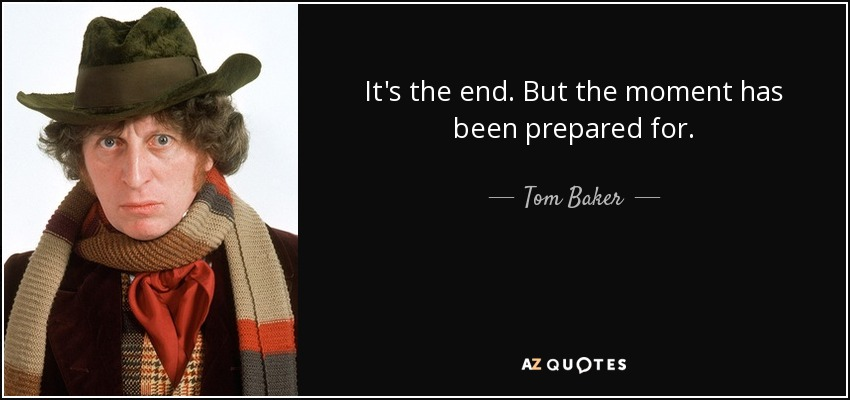
so long, northern facilitators... (the end has come, but the moment has been prepared for)

4 years ago, I accidentally found myself starting to host an monthly gathering of people who shared professional interest and roles in facilitation, and as facilitators.

It was only supposed to be for fellow facilitators in the Manchester area, and it was only supposed to be for a year or two.

But somehow, 4 years on, I only find myself only now 'signing out' of this role for the last time, having brokered links between facilitators around the world...


(maybe some background at this point would be helpful): 

I've been aware of, and involved with, the International Association of Facilitators for many years - and am part of the leadership team for the England and Wales 'chapter' of this body.

4 years ago, I asked the question "how can I find out if there are any fellow facilitators in my area, to swap stories with, and for a bit of mutual peer support and encouragement?" and learnt of the informal practice of #iafmeetup: you simply pick a venue, a day and a time, and then put an announcement out to see who turns up: not just IAF members, but anyone who feels that they may be a part of/interested in becoming more involved in, a community of facilitators.

At that point (2019) they'd been popping up all over the country, and always with the same format - an informal drop in for anyone in the neighbourhood who was free for about an hour, to chew over current things we were thinking about.


Now, most people will know that I like to try out new things, and challenge accepted norms where I can: so I introduced some changes to the format when we ran it in Manchester: 

  • we starting running the drop-ins for 90 mins - in recognition that travel time for people to get to a venue in Manchester wasn't always quick or easy, so the time they would get from being part of the conversation needed to be meaningful enough to help them justify the travel time.
  • we moved out of cafes, and into a library (the Portico), to reduce distractions to our conversations, and also increase the chances of having comfy seats.
  • we introduced the idea of alternate meetups having a specific focus: to offer a space for more structured learning and development of our skills.


And it started to go well - word got out, more people starting coming along, and the library were keen to keep hosting us (they have a kitchen on site with a great range of cakes!)   

And then someone on the other side of the world sneezed and our lives contracted to the size of our laptop screens.


I recognised how important these meetups would be for facilitators in my area, in allowing us ways to maintain contact and encouragement in the face of turbulence and uncertainty. All my fellow #iafmeetup hosts around the country were coming to the same conclusion, so we all moved out of our libraries and cafes, and into zoom rooms.


For various reasons, I found myself being quickly approached by other #iafmeetup hosts across the North of England, asking if they could 'merge' with us - possibly largely in recognition that I'd been using zoom a bit in previous years, so seemed to have some idea of how to make this format best work for people. And then equally as quickly, I found myself the 'last host standing' out of all of us in the North - but, in recognising how valuable people who were clicking in were finding the calls, persevered in continuing to offer my time to set up the calls and facilitate them in way of showing solidarity.

And looking back over this early pandemic period, I realise just how forward thinking we were being as a body of practitioners - in our first on-line gathering, we were already considering what the long term impacts of the pandemic might be in transforming the norms of facilitation practice:


Over this period, you may have seen various social media posts where I've shared some of the more unusual and entertaining topics we've discussed and shared stories around. We've also continued the habit of having specific themes to explore together - most of which I've written up notes from, and shared on my blog and elsewhere:

  • how to facilitate people who don't want to be in the room (2019)
  • how different physical spaces affects facilitation (2020)
  • facilitation vs training (2020)
  • northern facilitators vs UK facilitators - what the research shows (2020)
  • getting ready for hybrid facilitation (2021)
  • winning clients (2022)
  • the impact of faith in/on facilitation (2022)

And over this period, as we've been meeting on-line, we've also been joined by facilitators from the North of other countries around the world too, as word about the Northern facilitators of England has spread...  


This period has also been an age of the group 'selfie with props' - a tradition that people have seemed to increasingly look forward to as one of the highlights of the experience:


But now it's over. Today is the last 'Northern #iafmeetup' that I'll host.


I've not stopped hosting this group because I've had enough of my fellow facilitators, but rather because as IAF England and Wales, we've been re-thinking what we do, how, and why - and as part of this we feel it would be prudent to rationalise the on-line meetups to a monthly event (as it was before 2020). This will also see a wider group of people facilitating these calls to widen experiences and opportunities. Which means that I may be making guest hosting appearances in the future...!


If you were ever part of a Manchester/Northern #iafmeetup call over the last 4 years - thank you for turning up and sharing your time (and props!). I hope you took things from the conversations that were by turn encouraging, constructive, and challenging; in helping to enhance your skills and confidence both as a facilitator, and a fellow human being.

Hopefully I'll see you all again at some point in the future #iafmeetup calls (you can check out the dates and booking links over on eventbrite) - so while this is an end of sorts, the moment has been prepared for, so that there'll be a continuation of them in a new form...


Monday, October 10, 2022

could legal company forms help protect my mental wellbeing?

The date of my publishing this post on my blog (Oct 10th) marks World Mental Health day - a time when there are floods of other posts, tweets, emails, etc being circulated, so I don't expect that this will catch too many people's attention, but I've always stated that this blog is in part my 'thinking aloud space' - and this post relates to me 'thinking aloud' about an aspect of my mental wellbeing, and how I try and best manage it.


Firstly - as background to to the title of this post, I've always said that I prefer being a sole trader instead of incorporating myself as a limited company (as conventional wisdom would suggest I should)

This isn't just because I try and be unconventional, but also in remaining a sole trader, I have to pay more tax on my income and earnings that a company director or salaried employee would (and I think that paying tax is actually a good idea). It also means that technically, I've unlimited personal liability - I can't easily "wash my hands" of a problematic contract by simply dissolving a company (in whose name the contract etc, would be, meaning that nothing of the fall out would legally stick to me). As such, it forces me to try and take greater care in how I approach my work and also hopefully sends a message to those I work with that in seeking to establish trust and rapport with them, I'm willing to make myself very vulnerable personally. This element of personal risk is something I also try and further manage through my professional insurance policies, and how I seek to structure and maintain relationships with each person and organisation I find myself working with.


But it's world mental health day, so I'm taking this opportunity to revisit the above position about my not being incorporated to review it from a new perspective - my mental wellbeing.


As a sole trader, parent, carer, etc etc (we all have multiple identities - some of which are more secret than others...), I'm very conscious of trying to best manage my own health and wellbeing, including my mental health. And this list of roles I hold each brings its own tensions, stresses, anxieties, etc that aren't always easy to 'turn off' - but I've always sought to harness what some might see as negative or harmful emotional states that arise from them, to generate responses that help motivate and keep me moving forwards.  

Now, from time to time, I try and take stock of how I'm doing in managing the above - always with a view to trying to see if there might be ways to change a practice or habit that could help  further mitigate or reduce a recognised stressor in/on myself.

And it's the idea of company forms that I'm currently trying to consider to this end - a limited company exists as a 'person' separate to me. It's therefore that person, not me, who would sign contracts, agree terms and conditions, etc - so in the event of the worst coming to pass in my delivering a piece of work (the client decides to sue me), then I could give notice of dissolving the company, and not be concerned about the spectre of potential personal bankruptcy.

However... that's something of a 'nuclear option': I'd only be able to use this fall back position once, because if so 'activated' in that worst case scenario, then all my other business activities linked and associated to and through the company would also cease to be.  And if I then recontacted everyone in my current/original guise of being a sole trader, it would look like I was trying to duck responsibilities, be unethical, and generally exhibit the sort of behaviours that as a society, we decry when we see some larger corporates doing...

And then there's the question of how I'd mitigate the risk that having such a legally distanced structured from the people I'm working with might mean in terms of my becoming complacent in my relationships with them - one of the main reasons I'm currently maintaining my status as a sole trader.


So, on balance, I'm not sure that having identified this option I can actually adopt it - in theory it would offer me an assurance against the 'worst case scenario', and so help reduce a stressor and anxiety. But in practice if I ever needed to enact it, it would mean that I'd have to shut all my work down and not be able to easily restart working in the way I am now - in much the same way that if I were sued as a sole trader (and my insurance providers felt I'd not acted with sufficient degree of professional conduct with the upset client in order to cover the claim), I'd not be able to easily restart working in the way I am now. 

'Killing' a company that I owned could also impact on my personal credit rating (in the same way that getting personally sued might also) - so that consideration also balances itself out.


But it's an interesting perspective on the question that every sole trader and freelancer faces at some point - of whether to incorporate themselves as a limited company; but from a very different starting point. A perspective that seems timely with it being world mental health day.


However, as will all of my 'thinking aloud' posts that I make here in this blog, I'd be interested and keen to hear what holes people might be able to pick in my above 'workings out', and if there's anything that I've missed in thinking this through?  

Tuesday, June 14, 2022

how the tax system unfairly disadvantages smaller businesses (like mine)

As a non-VAT registered business (like half of all the other business registered in the UK), I can't reclaim the tax I'm charged by my suppliers on my running costs (utilities, marketing, insurances, equipment, etc).

This means my overheads and running costs are up to 20% higher than they might be otherwise if I were - and puts me at an unfair financial disadvantage against other firms who are VAT-registered (because they don't have to cover costs in the same way I do, in their being up to 20% lower...).


So, I hear you reasonably ask, why don't I simply register for VAT and stop griping about this?


The answer, I'm afraid, is that if I did I would likely price myself out of being able to win a lot of the work I currently do with smaller charities, community businesses, social enterprises, and the like: once VAT registered I would be legally required to pay the government up to 20% of all the fees I received from clients and customers (before costs) - so to avoid bankrupting myself, this means I'd need to add this additional amount to the invoices I generate. And as most of these groups in turn aren't VAT registered themselves, this means that they suddenly wouldn't be able to afford me: my price would be going up 20% overnight - but I wouldn't be benefitting from any of that additional fee, in having to pass it straight back to the government...

And is that fair? Well, at the time of this blog, there's increasing outcry about the rising cost of petrol and diesel - but as part of this, no-one seems to be pointing out that at least half of what we pay for this commodity is actually tax imposed by the government....


Tax is an emotive issue - many people seem to want to avoid paying as much of it as they can, and there are whole industries that exist to this end (for example, did you know that contracts awarded by the government in recent years have been to companies who've knowingly evaded paying nearly £20BILLION that should have been due in taxes?)

Some people feel that they're justified in this stance because they don't trust how the government uses the monies we pay in tax. And whilst I do have sympathy with this, governments change over time. My own position is that I want to try and be as consistent and honest with myself as I can, and so in tax, as with so many other things, I seem to go against 'accepted wisdom', in that I'm always making conscious decisions to increase my tax liability wherever I can... 

https://thirdsectorexpert.blogspot.com/2015/11/bonkers-why-im-staying-as-sole-trader.html


So whilst this post may have started off as a whine about VAT, now you're reaching its conclusion you'll hopefully realise that it's actually about trying to encourage us to have a wider and more grown up debate about tax than we might usually...

Thursday, May 12, 2022

why, as a freelancer I'm paying to offset my carbon footprint

My recently published impact report on myself introduced something new for the first time in the 16 years I've been doing it - commitments and targets to revisit and report against in next years (which will be due sometime in April 2023: watch out for the #AAimpact23 tag!).

Around this time I've also been leading a bootcamp for businesses who were wanting to do more around their environmental impact. And whilst they all started that journey thinking it would be the carbon footprint of their products, they all started to realise that in some instances the way that they ran their businesses was having a biggest cost to the environment than what they were selling to their customers.

And these two things came together around one of the KPIs in my impact reporting framework (which has also been one of the first measures I started using all those years ago...) - trying to consider my impact on the natural environment by tracking how far I've been able to avoid needing to make journeys 'in physical person', and so avoiding adding pollution from not needing to burn the fossil fuels that go into the petrol tank of a car, and the diesel for a train.

I've reflected on one of the unexpected outcomes of this practices and indicator in a previous blog - but I've caught myself increasingly asking 'so what?', against this measure: what's the point of measuring something if we don't do anything with the number it gives us (other than stroking our ego and vanity)?

So to this end, I've decided to use this metric to help me calculate the carbon footprint I'm creating when I can't avoid having to make physical travel to a client to deliver workshops, facilitate meetings, and such like. And with that tonnage figure, I'm then going to offset the carbon I've created by purchasing 'carbon credits' that can be used to invest in different projects and initiatives to try and 'rebalance the scales'.


But even now - so what? I'm a sole trader, and it's unlikely that the carbon footprint I generate from business travel will amount to anything remotely approaching significance in the context of other business'; and by association, what I'll pay to rebalance it will seem paltry in a global scale. So why should I bother? It'll only cost me more as a business, and won't have any meaningful impact on the environment.

The point, dear reader, is this - if we don't each take a stand and start to model the behaviours that we want to try and encourage and challenge others over in seeing a better world come about, then what credibility do we have to bemoan the state of the world? If we don't 'walk the talk', why should anyone else? And ultimately, if we resign ourselves to the mindset of "I'm too small to make any meaningful difference", just remember what's possible when 1 person stands up - it can inspire others to do the same, and so sooner or later, change happens. 

So in hopes of encouraging and challenging others in this endeavour, I'm going to start adding a rider to my client invoices and proposals: "any physical travel involved in the delivery of this work has been carbon offset at my cost as part of my commitment to helping to sustain our world for ourselves and future generations."  


Wednesday, May 4, 2022

why are the new wave of start-ups being called the purpose-led ones, when they aren't?

I'm not sure if it's because of the types of circles I usually find myself moving in, or the bias of how stories are reported in the media, or because there really is a general sense of it, but it seems that we're in a period when most new start-ups are being referred to having 'purpose' (and more so than existing/previous waves of start-ups)?


If this is really true, then I'm wondering where are all these new businesses who apparently are motivated by their values and wanting to create impact actually are: 

- the most commonly googled questions by entrepreneurs and people starting up their business include NOTHING about purpose, impact, values, etc (see https://www.hitachicapital.co.uk/business-finance/invoice-finance/invoice-finance-blog/the-most-common-questions-startup-owners-ask-google/)

- and the most frequent search by type of business offer being started is for clothing. And whilst I agree that there are some needed and 'proper' things happening in this industry (labour behind the label, for example), this is an industry that's also strongly associated with a plethora of negative impacts (the cost of 'fast fashion', etc)


So, based on the data from the biggest search engine in the world, these new waves of 'purpose-led start-ups' maybe aren't as prevalent as is being otherwise suggested to us.

Or maybe they're simply not using google to do the research they need to launch their new ventures like the rest of us do?

Wednesday, April 13, 2022

social enterprise legal structures for humans

Some people regard me as an expert authority on legal and governance forms for social enterprise, community businesses, and co-operatives - and while I always encourage people not to trust any guidance I offer them on this topic (because I'm not academically accredited in legal stuff, and more importantly because I'm not the one who's going to be legally responsible for administering the chosen form), people take encouragement from my achievements in changing company law, navigating Society Rules with the FCA, and finding paths through charity legislation.

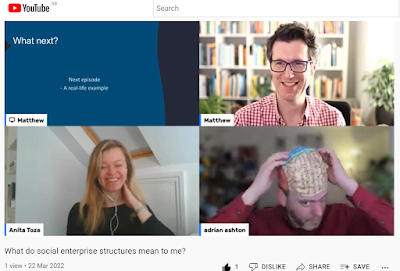
Over the decades that I've been supporting people understand these choices, I've created a few tools/prompts to help focus discussions and reflections ('CHAMP' and 'Adrian's 4-boxes') - but this post isn't about those tools - instead it's about a 3-part limited youtube series I was invited to be part of the 'main cast' for.


A contact through one of my networks had approached me to ask if I could help them explore and understand what the best legal form for a new social enterprise they were developing might be. And as we talked about how I might offer guidance and assistance, we hit on the idea of making this a 'performance piece' - drawing back the curtain on how people usually go through this process as an encouragement to the wider sector, and also a working out of some of their (and the emerging enterprises') values.

So we scheduled 3 afternoons to talk though approaches to not only understanding why this legal form question is so important to get right, but the different ways we can pick and choose between them, and finally, applying all of this learning in real time/live to their nascent social enterprise.

There's an 'official' long post on LinkedIn by Matthew Bellringer (the contact that sparked this) where you can get the official story of how this series came to be: https://www.linkedin.com/pulse/foundations-thriving-social-enterprise-matthew-bellringer/ but I wanted to take the opportunity to reflect on how I found this process, in it being different to the ways in which I usually offer this type of support - to pull out what surprised me that I hadn't considered before, what was an encouragement in allowing more time and space to explore than is usually available, and some of the things which you don't normally hear or read about in this area.


So - the below points are what I think are useful framing/warm-up for anyone thinking of approaching either choosing or reviewing a legal or structural form for their social enterprise - if you want to know more about them, you'll have to follow the links to youtube and watch all 3 episodes...

- Comparing legal structures to buying second-hand car: you wouldn't buy a car without wanting to know some of its history to assure you that it's been built well, and looked after, so why don't we seek the same assurances when deciding between legal forms?

- The risks of using data that maps legal forms used by social enterprise in helping us choose one for our own: as part of the episodes, we looked at research into how far different legal forms are popular/less popular by the wider social enterprise sector. But as you'll see as you watch this segment, this mapping - as undertaken by national sector bodies, often presents a contradictory picture of findings. As with all research, what you find depends on how you ask the question, and whom you ask it of. And it seems that our sector leaders can sometimes do this in ways that might not seem to be that robust..?  

- None of the existing tools designed to help you plan your social enterprise model (social enterprise canvases, specialist business plan templates, etc) help you relate your ethos and values to the legal form you'll pick. Which seems a bit bonkers, because your chosen legal form is probably one of the best ways you have to make sure said ethos and values can be best protected into the future. That's why I developed my 'CHAMP' framework, which is profiled in detail through these episodes.

- Your legal structure as a social enterprise can influence your credibility to lobby and speak out on social issues. For example, charities and CICs are banned from undertaking political activities: but if we're serious about creating systemic change as a social enterprise, then at some point we have to engage with the policy and law makers (which perversely, our chosen form may actually prevent us from being able to do!).

- The problem with all of the toolkits designed to help making the process of picking a legal form easier is that they assume you understand the jargon, and underlying concepts associated with legal forms and governance. Which most of us don't, which explains why these toolkits are so underutilised by the wider sector.

- There's a confusion about Members, members, and membership, that knots so may people up when approaching social enterprise legal forms: one has legal power over you, one is a supportive friend, and the other is about collective activism that influences your decision making. Can you tell which is which?

- Stickers and badges, or legal power – which would people prefer to have in your social enterprise? And which would you want people to have? (remember that there are wider trends going on in society that means formal membership bodies are generally seeing their numbers start to plateau and decline - people may be more interested in being part of you for specific periods, rather than for life).

- We managed to compress over 400 years of legal structures for social enterprise into just over 10 minutes. A new personal best for me!

- How the regulator for your chosen social enterprise legal form can strengthen others' trust in your venture. None of the toolkits or other materials 'out there' that I come across to help you decide about legal forms ever talk about the regulators: what they can do to you, how they can support and protect you, and how they may influence how others see you. But this is also a far wider issue and problem: I also see it a lot of start-up programmes, where social entrepreneurs are supported and encouraged to start-up and incorporate their ventures, but then given no support in knowing how to 'look after it' with their respective regulator - leading many early stage social enterprises to suffer fines, penalties, and even enforced winding up because no-one explained to them about the regulators... 

- It turns out that knowing how to bake cakes can be very helpful in informing how we approach designing different membership models in social enterprise legal forms.

- Campfire songs can be equally important in the selection of choosing a legal form for a social enterprise.

- and finally - why every social enterprise should be wary of S&M clubs if they’re going to be a CIC.


I've found myself enjoying this process of working with a group to find an answer to a question, and also that it's encouraged us to take more time in how we consider the options and implications - despite doing the whole thing remotely to each other with video calls, etc, it's felt like it's helped to make choosing a legal form a process that's allowed us to be more human. 


Episode 1: what's a social enterprise, and why do I care?  

https://youtu.be/5T7TzanQh0s 

Episode 2: what do social enterprise legal structures mean to me? 

https://youtu.be/EaRRsWPfDK0

Episode 3: social enterprise in the real world. 

https://youtu.be/JmEi3b6f9_g